
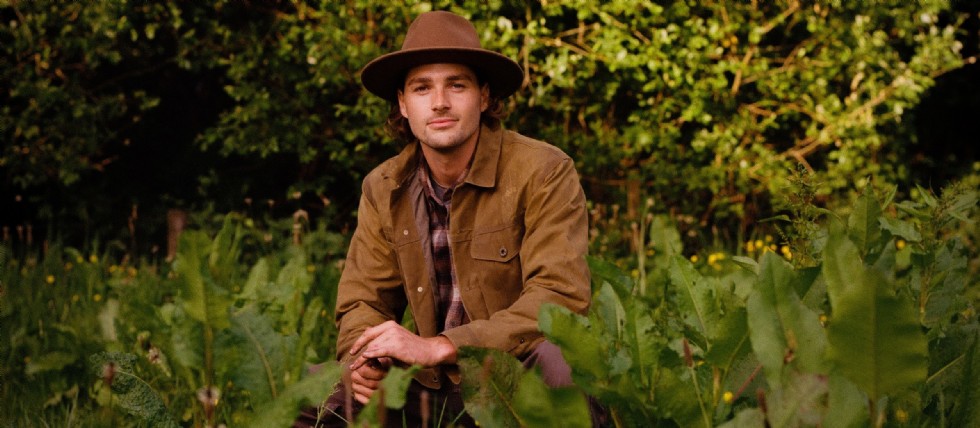
Once one of YouTube's original 'it' boys, Jack Harries has spent much of his life in the digital spotlight. These days, however, he's finding fulfillment in something altogether more...analogue. Having traded the bustle of London for a centuries-old watermill in Cornwall's countryside, the filmmaker is embracing a slower, more considered way of living. One rooted in nature, community and the art of making things by hand. From breathing new life into his historic home to reviving Britain's disappearing crafts through his latest venture, Wild Tales, here, Jack speaks of the beauty of putting down roots, finding purpose in the everyday and learning to live a little more slowly.
You’ve spent years travelling the world, but you’ve now chosen to put down roots in Cornwall. What sparked this decision, and has it paid off?
I’ve been lucky to travel a lot throughout my career, mostly reporting on the impacts of climate change. That work has taken me from the Arctic to Antarctica, to remote islands in the South Pacific, Borneo and beyond. But ultimately I wanted to interrogate my own life: to challenge myself to live a little slower, a little more locally and a little more seasonally, in a way that was more deeply connected to the natural world and its cycles.
That sparked a multi-year search across the UK for somewhere I could call home. Eventually I came across a derelict watermill in need of a lot of love, and I was naive enough to decide I was the right person to take it on. I’ve been living here for three years now, and for the first time it feels like everything is clicking into place. It well and truly feels like home, though it’s been a challenging journey along the way.
Having grown up in London, what surprised you most about living in the countryside? Has it changed what you value in your day-to-day life?
I was born and raised in West London and was a city kid my whole life. I always assumed I would live in London, so moving to the countryside has been a dramatic change of lifestyle. More than anything, it’s shown me how much I don’t know. It’s been an incredibly humbling experience.
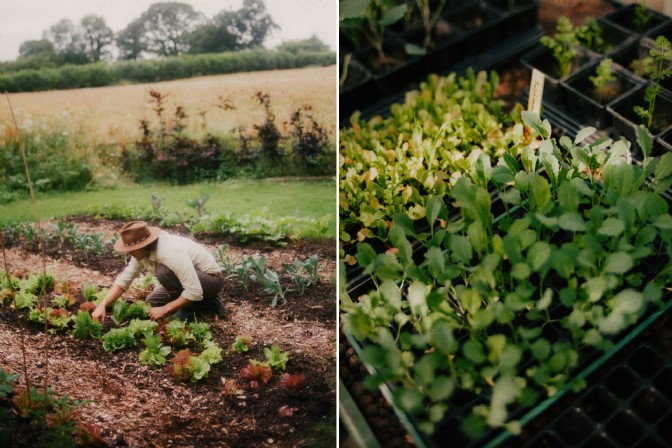
When I arrived, I realised I knew nothing about how to grow food, read the seasons, look after animals, or build and fix things with my hands. These are skills I simply wasn’t taught growing up. The most beautiful part of the journey has been realising that this wisdom is still held by people all around us; they’re just usually not the loudest voices in the room. I’ve been lucky to meet some wonderful people, like Mark, my postman, and Heather, my next-door neighbour, who have made me feel welcome and helped me learn a new way of living.
It has definitely changed what I value. I have far more appreciation for the hard work that goes into growing and cooking food, raising animals, and craft skills like woodwork, basket weaving and candle making.
Has settling into one place changed your relationship with travel, or what the idea of home means to you?
My relationship with travel has changed dramatically over the last few years. These days I travel rarely, and when I do, I try to embrace a slower version of it. Usually that means packing my life into my camper van during the summer months, when I rent out my home in Cornwall, and exploring somewhere new. This year I explored the west coast of Ireland and spent some time studying at Ballymaloe Cookery School. Last year I drove from Cornwall to the Lofoten Islands at the top of Norway and back again. I love this kind of travel because it forces you to slow down and appreciate the landscape changing as you move.
Generally, though, I really enjoy being at home and can easily spend a week without leaving the house. Every now and then I make the journey back to London to see my parents, but it’s not something I miss.
What was it about the mill that first captured your imagination?
What excites me most about the mill is that it holds so many clues to an older way of living. Before the arrival of fossil fuels, watermills were one of the most important sources of power we had, grinding grain and driving industry using nothing but the flow of a river. That all changed with coal and oil. To me, watermills are a symbol of a fork in the road, a reminder that we could have chosen a different way forward.
This mill also has an old hydro turbine in the garden, installed in the 1970s to generate electricity, and I dream of getting it running again. There’s an old stone and wooden cider press that was used for generations, too.
Being a mill, there’s water everywhere. I crossed the Thames every day on my way to school, and I think I’ve always been drawn to living near water and the wildlife that calls it home. My favourites are the heron that frequents the mill ponds, the kingfishers that flash cerulean blue as they dart across the water each morning and the buzzards that circle high above the valley, letting out their distinctive, striking call.
There’s something romantic about bringing an old building back to life rather than starting from scratch. How have you approached the renovation, and how important has it been to preserve the character and history of the place?
The first thing I did when I took on the mill was research its history, and there turned out to be a great deal of it. The first person to buy it as a truly derelict mill was the artist and cartoonist Norman Thelwell. He turned it into a home and wrote a book about the experience, A Millstone Round My Neck, a funny, captivating account filled with his own detailed drawings. It was a real joy to read. The mill was later owned by the town planner Max Lock, who created the mill ponds, installed the hydro turbine and famously held music concerts in the old mill.
My approach was to strip the building back and rediscover its original features, some of which I only knew about from old photographs and Thelwell’s drawings. It was about honouring the original architecture and history of the place. I was lucky to work with a brilliant Cornish builder, and together we employed Cornish tradespeople throughout and used local materials wherever we could.
Restoring an old building like this has been a real privilege, and the truth is, I don’t think the project will ever really end. My next focus is the old cider barn, which hasn’t been used in decades.
You’ve always had a strong connection to the natural world. Has that influenced how you’re restoring and designing the mill? Are there particular materials, objects or details you’re drawn to?
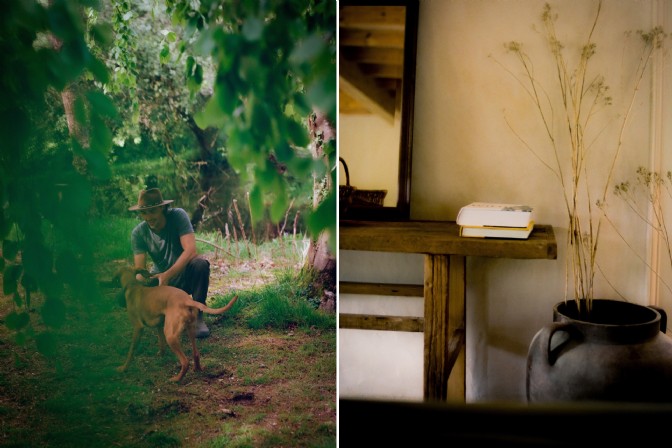
What makes the building so special is that it’s surrounded by nature on all sides. So, in designing the house, I wanted a neutral, earthy palette that would enhance the views through the windows rather than compete with them. I was lucky to work with Joa Studholme at Farrow & Ball on the colours, and it was a joy to work with someone with such expertise.
The materials were just as important. All the wood in the house came from a fallen ash tree nearby. The walls are plastered in Cornish lime and painted with natural limewash, which allows the old stone to breathe. We even sourced reclaimed wooden floorboards from a local church, and most of the furniture is reclaimed or antique, which helps keep the atmosphere and history of the building intact.
It’s also a genuinely practical house. The slate flagstone floors and the sturdy Grade II-listed mill building are made to welcome the outside in: muddy boots, wet dogs and baskets of produce from the garden. It’s not just a beautiful house but a real working home, and I love that about it.
Wild Tales feels like a natural extension of so much of your work over the years, but also something quite personal. Where did the idea begin, what does it mean to you, and what are you hoping people will take away?
Wild Tales is the community I wish I’d had when I moved to the mill three years ago. It’s a space for people who want to become more capable with their hands, connecting those who want to learn traditional skills with the people who still know how.
It began a year ago, when my co-founder Rory Oxenham and I met in a pub in Cornwall. We’d both been struck by how quickly traditional crafts are disappearing in Britain, and we both wanted to spend less time at a computer and more time working with our hands. Wild Tales was our attempt to do something about it. Building it with Rory has been one of the most joyful projects I’ve ever taken on.
We’re now a community of 200 people around the world. Over the past year, we’ve learned candle making, fermenting, cider making, herbalism, foraging, natural dyeing, traditional navigation and folk singing, amongst other things. Our members are international, but we also run local gatherings in cities across Europe and in-person workshops with makers. Most recently, 35 of us gathered in Cornwall for our annual retreat to learn willow basket weaving, campfire storytelling and breathwork, with a tour of the temperate rainforest led by Merlin Hanbury-Tenison. It was a really special few days, and something of a pinch-me moment.
That said, it feels like we’re only just getting started. So many people want to live a little slower and feel more connected to themselves, to each other and to the world around them. We hope Wild Tales can help keep this traditional wisdom alive and inspire a new generation to learn skills that have been passed down for centuries.
So much of life seems to be about doing more, seeing more and moving faster. Has this new chapter changed your relationship with ambition, or what you consider a successful or fulfilling life?
I’m still ambitious and driven, but for me, success is now about balance. Slow living has never been about doing less; it’s about being more intentional with where my time and energy go. It’s about building a life that lets me spend time in nature, with friends and family, and nourishing myself through good food, exercise and physically rewarding work. Craft has become a beautiful example of that. If you’d told me five years ago that I’d be spending my evenings weaving baskets, I wouldn’t have believed you.
What does a lovely day at home look like for you now? Are there any small rituals or simple pleasures you’ve come to cherish?
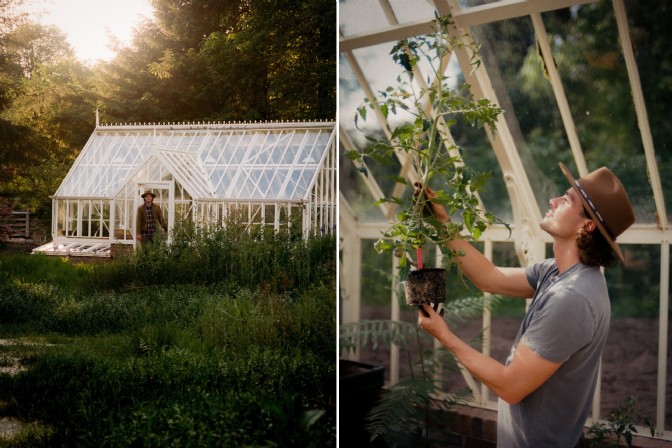
At the moment, I’m challenging myself to take a daily dip in the leat that runs alongside the house. We’re well into autumn, and the water is getting colder by the day, though I’ll admit I often follow it with a few rounds in the sauna to warm up. Getting outside and moving my body, especially with that combination of hot and cold, has become an important ritual for staying grounded during the working week.
I’m also really enjoying cooking. A good evening looks like the log burner lit, the dog stretched out in front of it and a stew bubbling away on the hob, ideally made from locally sourced produce.
What’s next for Jack Harries?
I’m in the early stages of writing a book, which is a new creative challenge and one I’m excited to take on. There’s also a lot we want to do with Wild Tales, including developing more physical products and helping people bring craft and seasonal practices into their everyday lives.
And one day, in the not-too-distant future, I’m dreaming of making my own cider, though the trees in the orchard have a little more growing to do first. So I’ll just have to practise what I preach, be patient and let nature do its thing.
With thanks to Joya Berrow for the imagery.
Discover more about Wild Tales, follow Jack's journey on Instagram or YouTube, or find a wilderness retreat of your own.


