
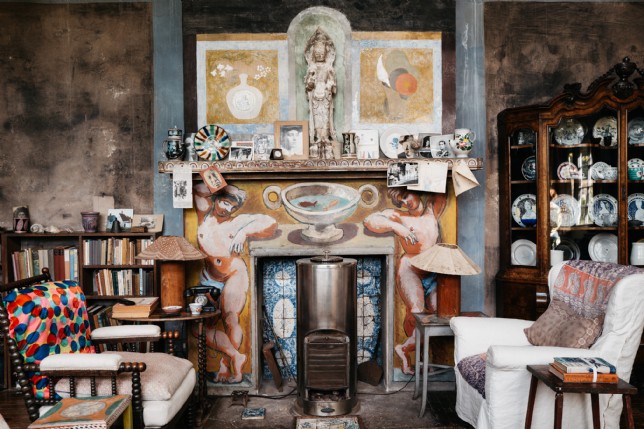

In the heart of pastoral Sussex lies Charleston, once the home, studio and gathering place of central figures in the Bloomsbury Group – one of the most influential circles of artists and writers in early-20th-century Britain. Renowned for their radical ideas about art, literature, politics and sexuality, they challenged convention and sought to live and work according to their progressive ideals. For painters Vanessa Bell and Duncan Grant, Charleston’s interiors became a canvas for both artistic and social experimentation.
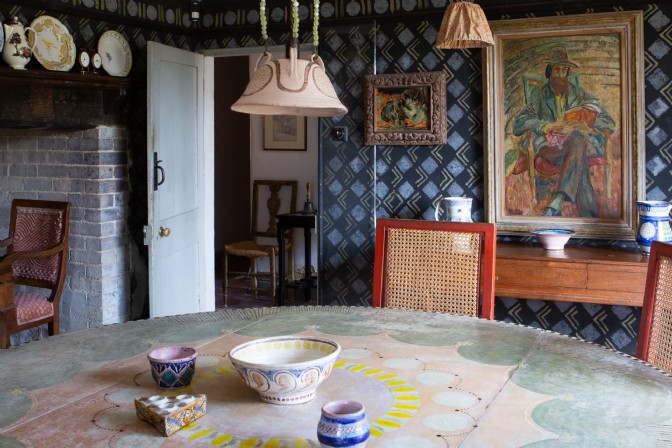
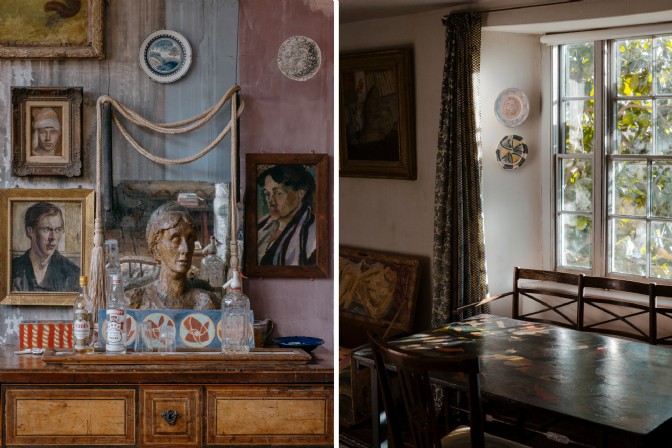
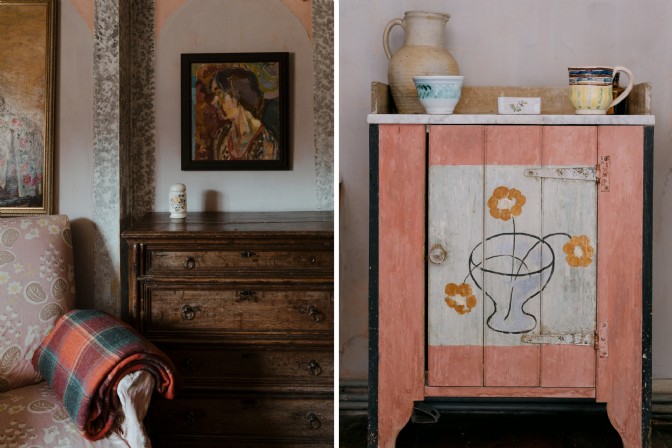
Creative energy still pulses through Charleston today. Vibrant murals meet hand-painted furniture, intriguing textiles, ceramics and expressive artworks. More than a museum, it is a place where past and present converse – a living testament to how creativity can flourish beyond the picture frame.
Here, I speak with Dr Darren Clarke, Head of Collections, Research and Exhibitions at Charleston, to uncover the stories behind the house, the people who made it extraordinary, and the enduring influence it has on contemporary artists and designers.
Lewis Ronald
How did Charleston become a creative hub for members of the Bloomsbury Group?
It all started in 1916, when the artist Duncan Grant and his lover at the time, the writer David Garnett, were both conscientious objectors to the First World War. The Bloomsbury Group were, in principle, opposed to the war, but they were particularly against the idea of conscription. They were therefore given permission to find work of national importance, or else face imprisonment. One day in September, on the advice of her sister Virginia Woolf, Vanessa Bell came down to Lewes and found a farmer willing to take on the two men. Vanessa sublet Charleston, and they all moved in together in October 1916 – Vanessa Bell, her two sons Julian and Quentin, Duncan Grant and David Garnett. It remained their full-time home for the rest of the First World War.
After the war, David Garnett left, married and started his own family. Vanessa Bell and Duncan Grant, however, kept Charleston as a summer retreat. They also had a house in the south of France, where they worked during the winter. With the outbreak of the Second World War in 1939, they decided to make Charleston their primary residence. Vanessa Bell, Duncan Grant and Clive Bell – Vanessa’s husband – all joined the household. They gave up their house in the south of France, sublet their studios in London, and moved all their belongings down to Charleston. It became their permanent home.
Euan Baker and Lee Robbins
In what ways did the artists challenge the conventions of their time?
I think it’s interesting that these artists were effectively forced from London at the height of this incredibly exciting period. Even though the war was on, the 1910s were a time of intense creativity for artists. They had been heavily influenced by Roger Fry’s Post-Impressionist exhibitions in 1910 and 1912, which had completely transformed the way they approached art. They had been suddenly ignited with this fire of creativity – looking to France, but also to many other places, such as North Africa and Eastern Europe – for new influences and new ways of thinking about and making art. They brought that ideology with them, but they were also exploring new ways of living and experimenting with new kinds of domestic relationships, though still within the wider constraints of the time. Duncan Grant, for instance, was in love with both David Garnett and Vanessa Bell. Same-sex relationships were illegal, and if Vanessa Bell – as a married woman – had been discovered to be having an affair, she would have been ostracised from society. When Vanessa and Duncan had a daughter, she was raised as Clive Bell’s child to the public and even amongst family and friends outside their closest circle, because having an illegitimate child would have been considered outrageous.
Lee Robbins and Euan Baker
Can you tell us more about the decision to treat the interiors as a canvas?
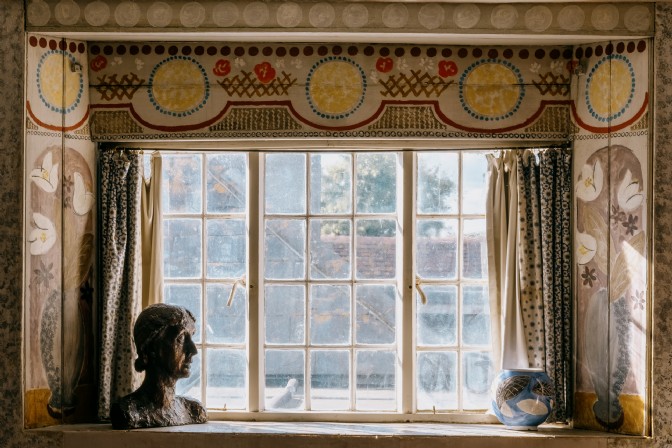
When they moved to Charleston in 1916, they had been working as co-directors of the Omega Workshops, which Roger Fry had established in 1913 to bring the Post-Impressionist aesthetic he had introduced from Paris into the home. The Workshops employed young artists who designed textiles, furniture, ceramics, rugs, children’s toys, and even entire interiors, with workshops and showrooms based in Fitzroy Square, London. Vanessa Bell and Duncan Grant were deeply involved in the project, and it carried over into their homes. Charleston became a kind of Omega, Post-Impressionist interior, where everything was considered. Art wasn’t just confined to the picture frame; every aspect of the living space was part of the work of art.
What do you think 'home' meant to the artists who lived at Charleston?
Home is an interesting concept for them, because they always seemed to be on the move. Duncan Grant, for example, grew up in India, where his father served in the army. The family had different houses there, but his mother returned to Scotland for his birth and he came back to Britain again at the age of nine for boarding school. When they all arrived at Charleston, there was definitely a sense of relaxation because it’s in a beautiful, tranquil area that’s away from people – but I think home was something they carried with them. They would control their environment, for example, if you lent them your house, as a friend did in 1915 – they would decorate the walls, paint the doors and cupboards, move the furniture around, take bits out and make the space their own. There was an aesthetic vision of home that they wanted to be in but I’m not sure how sentimental or nostalgic it was.
Euan Baker
If the walls of Charleston could speak, what would they say?
“I’ve got a history before 1916.” The house is very old – I think the earliest part dates from around the 1600s. There’s a map that shows it as a tiny house, which was gradually built up over the centuries as it was needed for different purposes. As the farming became more prosperous, the house got bigger and fancier. A new front was added at some point in the 18th or 19th century. The Bloomsbury Group made their own additions – they built a large studio at the back, converted the attics and made all sorts of other changes. So, if Charleston could speak, it would say, “I’ve been here a very long time.” The story of the Bloomsbury artists is now the dominant narrative around it, but the house and the area go back many centuries before that.
How does Charleston continue to influence contemporary artists or interior designers today?
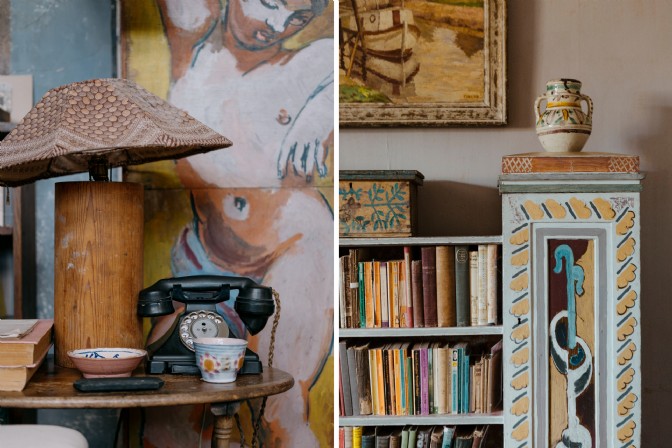
I think it has a wonderful accessibility. You come in and feel that creativity is in the air – it’s all around you. You can see how the artists brought together so many different pieces from different places, cultures, colours and materials, and how they all seem to converse with one another – they sing together as one wonderful chorus. That’s what I think appeals to interior designers: there isn’t a hard-lined design concept or really any rules. It’s very instinctive. It’s accessible and welcoming.
Euan Baker and Lee Robbins
How does Charleston Festival honour the Bloomsbury Group’s spirit, and how do you decide which voices to include?
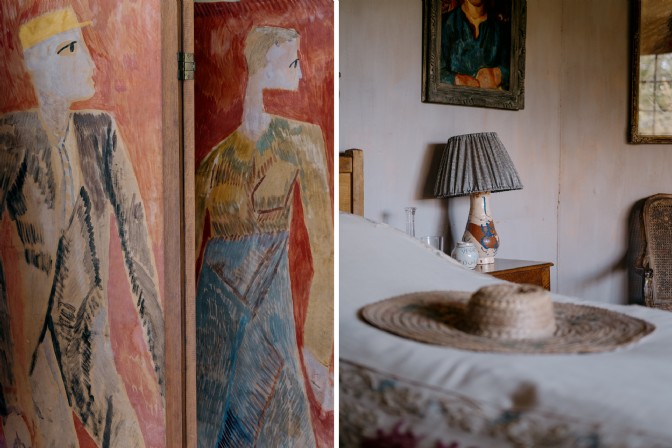
It was always the intention of the Charleston Trust, since it was formed in 1980, that Charleston wouldn’t be in aspic, but a living place where conversations and ideas are still thriving. The Charleston Festival was started around 35 years ago, and it has grown over the years. Conversation and the exchange of ideas were important to the Bloomsbury Group, and they’re still important to the events programme at Charleston – from the big Charleston Festival in May to Queer Bloomsbury in September and the Garden Festival. Looking at the bigger social scene, of artistic ideas and political ideas, is very much an important part of Charleston, and also captures the Bloomsbury spirit. It’s looking at what voices feel relevant to us, what new things people are saying, and what we think our audience will be really interested in seeing.
Euan Baker
What are your hopes or plans for the next chapter of Charleston’s story?
Well, we are looking to get as many people as possible to know about Charleston and Bloomsbury. We have a wonderful gallery in Lewes and are working on the next phase of that. It opened in 2024, and now we’re looking to create a permanent Bloomsbury gallery. That would introduce people to the story of Bloomsbury – particularly Vanessa Bell, Duncan Grant and the visual culture – but also all the different ideas: ideas about gender and sexuality, politics, art history, literary history, and how those threads embroider their way through British and European history. Hopefully, that will open in the next few years. There will also be a new collection store there, which will give people the opportunity to see our vast collection, which at the moment is inaccessible at Charleston. We will also be working with some really exciting galleries – including the big nationals that hold Bloomsbury works, like the V&A, the Tate and the National Portrait Gallery, as well as galleries across the world that want to show exhibitions. We’ve just worked with a gallery in Denmark on the first exhibition about Bloomsbury in Copenhagen. We’re looking for all sorts of partners to tell the Bloomsbury story and Charleston story.
So, that is our next step: world domination.
With thanks to Dr Darren Clarke for the words.
Interested in visiting Charleston? Stay at Studio Fold, Fawn Wood, Roserai and The Art House – all within an hour's drive.
If you're feeling inspired, read our Designer Insider piece with Tess Newall, or peruse our full collection of design-led escapes.


