
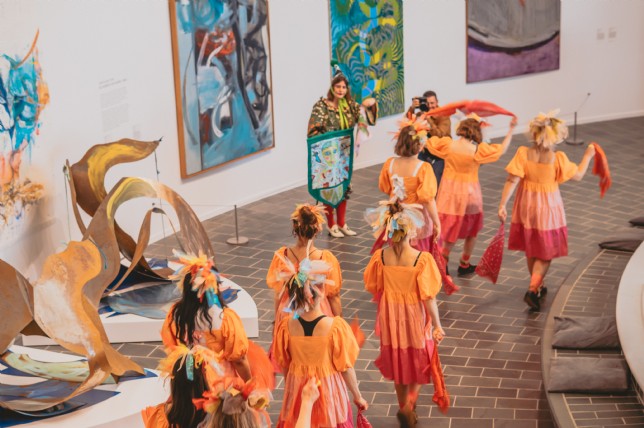

Lally MacBeth is a Cornwall-based artist, writer and curator whose work, as she puts it, “wanders the line between the real and the imaginary.” Most recently, through her first book The Lost Folk, she celebrates the folk culture of Britain, seeking to breathe new life into disappearing customs and to consider what they can mean for us today. Folk, she argues, is for everyone – not something that belongs solely to a rose-tinted past. It can offer connection and community in an age marked by digital isolation and, often, a sense of rootlessness.
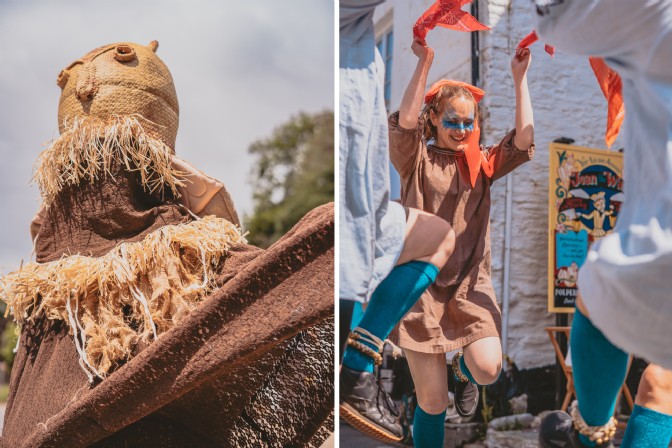
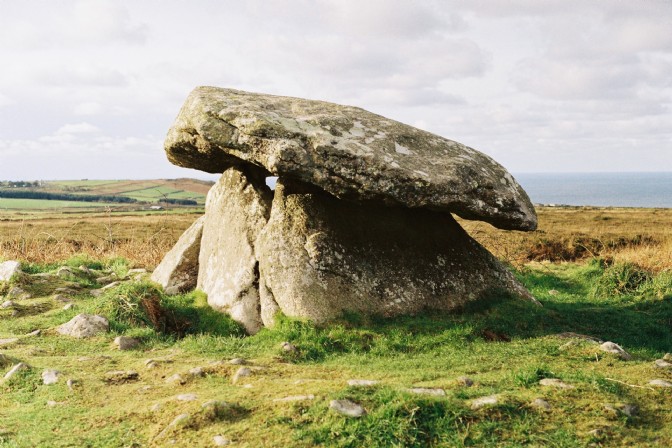
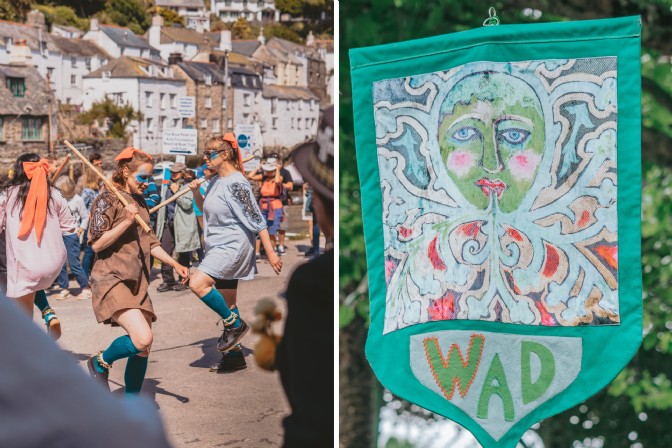
Lally is also the founder of The Folk Archive, a resource devoted to documenting folk customs, costumes and lore. She is a member of WAD, a Cornwall-based Morris dancing side, and also co-founded Stone Club, a forum and community dedicated to prehistoric stone sites across Britain, running events that include country walks, exhibitions and talks. Here, I sit down with Lally to discuss the enduring power of folk traditions in the modern world and the rising popularity of “stone-stomp” tourism.
@folktographic, Connor Lassey
Folklore, performance and ritual are key threads in your work – what do these forms reveal about the past that ‘conventional’ history might overlook?
I think folklore allows us to look at the everyday experiences of people, and that’s what really interests me, because they often get overlooked in favour of more glitzy or exciting histories. As a child, I was never really interested in the grand histories of kings or queens; I always wanted to know about the servants or the underground histories. I'm really interested in the bits that fall between the gaps and that might seem too ordinary to be extraordinary, but because they've often been collected in less detail, they have become the extraordinary bits.
You founded both The Folk Archive and The Stone Club, how do you hope people engage with these communities?
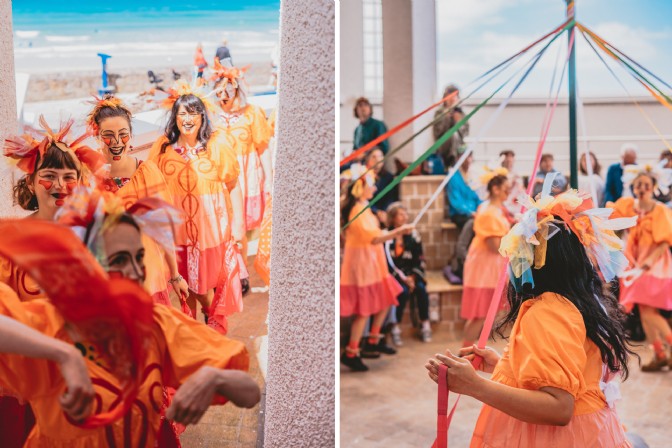
For me, community is such an integral part of folk culture, so I hope that people are able to use these platforms to meet new people, engage in their folk histories, and create their own new customs and traditions. I love it when people send me information and photos of customs or objects from their towns, villages or cities – I learn so much. That, for me, is the exciting thing about a community: we can all learn from one another.
@folktographic, Connor Lassey
What do you think has driven a recent resurgence of interest in folk culture and ‘stone stomp’ tourism?
There are a number of factors, I think. In a time of political, economic and environmental unrest, the world can feel like a very scary and unsettling place. Folk culture and ancient sites offer us points of sturdiness, of hope, of something other, and that feels deeply consoling. I also think getting out into nature and spending time amongst other people is a brilliant way of lifting one another up and saying, "It's ok, we've got this!" Folk culture has such radical potential for change as a way of creating the future we want to exist in. It's a way of building community in a society that favours individualism.
Matthew Shaw
Many folk customs are closely tied to the natural world, marking seasonal changes and cycles – how might modern lives benefit from noticing the rhythms of nature in the same way?
Being in tune with the natural rhythms of the seasons is incredibly helpful for both mental and physical health. It offers us natural points of pause in the week, the month and the year – which is very important in a world where it can feel hard to find space or time, and we are all too busy to think. I find it so hopeful knowing that May Day is around the corner or that harvest is coming. It means there are moments to stop and celebrate, to evaluate and move forwards.
@folktographic, Connor Lassey
For travellers interested in the stories and rituals of landscape, which sites in Britain or Ireland do you consider unmissable?
I'd probably have to say Avebury because it's such a remarkable place and so rich with meaning. I'd recommend spending some time there, walking past Silbury Hill and up to West Kennet Long Barrow. In Ireland, one of my favourite places is The Burren because it is so thick with history and ancient sites; it’s also just the most beautiful landscape. It's a magic place.
You’re based in Cornwall, which has its own deep-rooted sense of place and myth – in which ways do you personally connect with the landscape and the stories it holds?
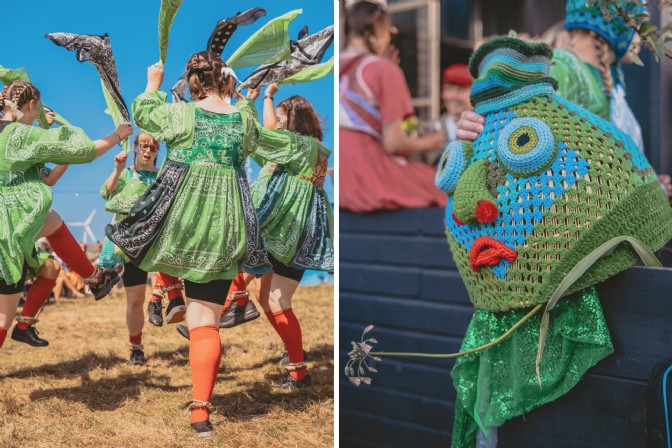
One of my favourite ways to connect is by going out on walks to see some stones or old churches. I love going off the beaten track and discovering things that have slipped through the cracks. I also love going out with my morris side, The WAD – I'm their fool and we have such fun visiting festivals across Cornwall. It always feels incredibly joyful to bring music and dance to a place.
@folktographic, Connor Lassey
In your new book The Lost Folk, you encourage readers to become collectors and creators of their own folk traditions. Why do you think this practice is important for people today and for future generations?
For me, it's really important that everyone feels able to access folk culture. I've often heard from people that they don't feel able to get involved with traditions or practices that have been going on for a long time. I always say: if you don't have a tradition, invent your own. You can use fragments of history, or you can go full futuristic and invent something entirely new. With collecting, it's all about looking at the things that are falling through the gaps – or even the things that seem so obvious you might ask, “why would anyone photograph them?” Recently for me, this has been knitted postbox covers, which have been popping up everywhere. I've started snapping pictures of them when I see them!
Explore some of the locations that Lally highlights in this piece, including Cornwall, Wiltshire and Ireland.
With thanks to Lally MacBeth for the words, to Connor Lassey and Matthew Shaw for the imagery, and to WAD for providing Connor Lassey’s images.
If you're feeling inspired, read our piece Footsteps through folklore to take a journey through regions embedded with myth, memory and folklore around Britain and Ireland, or peruse our full collection of escapes.


