
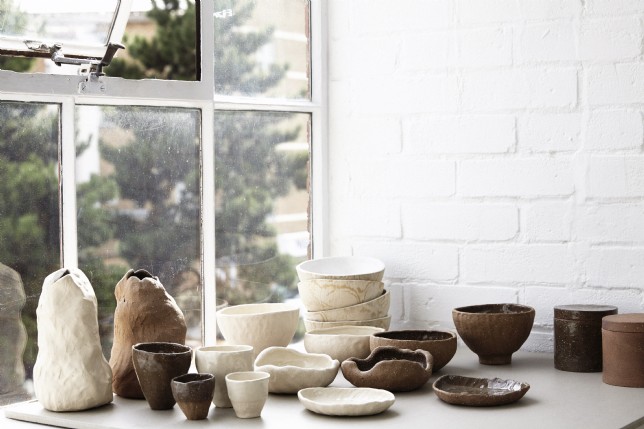

Ola O. Smit is sipping her matcha from a cup made by her friend, potter and artist Ana Kerin. She laughs when I notice because, she says, every cup in her collection has an assigned purpose. Ola desires to be a minimalist, but is instinctively a collector.
This is a glimpse into Ola's everyday: a life arranged around details, objects imbued with meaning, spaces that hold energy and a table that builds community. Originally from southern Poland, she arrived in London over twenty-two years ago for two months to improve her English and never left. Since, she has built a distinct photographic language within the food and hospitality industry – shooting for the likes of the FT Weekend and House & Garden – and has co-founded Table Magazine, a passion project she describes, with complete sincerity, as her second child.
Here, we talk about interiors, instinct and what it means to build a life and a magazine around the table.
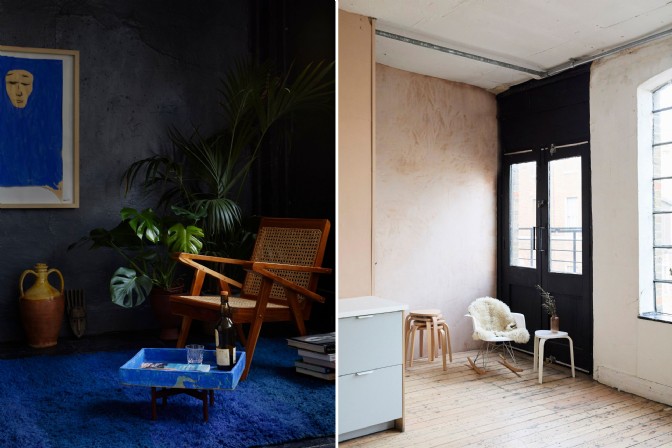
@OLA O. SMIT (pictured, left image: new tribe x kana. pictured, right image: studio feast)
You’ve spoken about being drawn to spaces because of the energies they carry, the rituals they shape. How does this influence your photography?
I instinctively follow what feels good. I was drawn to interiors because I believe that spaces and objects carry energy, that you can feel differently in differently designed rooms. When I was first assisting on interiors shoots for publications like Elle Decoration and House & Garden, we would take only two or three images. You’d walk into an empty studio and the set designer would transform it into a beautiful room. Then they would collapse it and build something else entirely. The same space, with the same walls, could be changed into two or three distinct rooms with different feelings within a single day. That taught me something I carry with me in my work: that the energy of a space shifts when you change the objects in it.
It’s what happens when you move into a home where someone else has lived. They take their things, you bring yours and it becomes part of a new story. The same is true of restaurants. In a space where you feel connected – where every single object and design decision makes your whole body react – it enhances the entire sensory experience. If I go somewhere and I don’t feel the vibe of it, I’m just eating. But if the space makes me feel wonderful, the food tastes better.
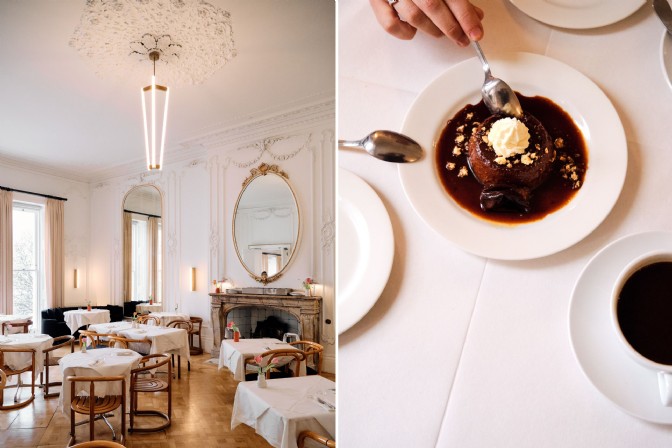
@OLA O. SMIT (pictured: the lavery)
Your work has a quality of attention that makes everyday objects feel significant. What draws you to this?
Objects make me feel good – that’s the simplest way I can put it. I love the feeling that interiors and beautiful things bring, the energy and happiness and inspiration they give me. I’m drawn to handmade things that carry the energy of the maker, but also to beautifully designed things (even if made in a factory) which carry the touch of the designer. At small markets, that’s what I’m drawn to: the handmade, the personal, the things that carry a story.
You co-founded Table Magazine in 2017, which centres around food as a common ground. Now in its ninth edition, with you as Editor-in-Chief alongside Managing Editor Lizzie Mayson and a growing team, can you tell us a little about sharing stories from around the world with people from their own coffee tables?
The idea was always about the table, not just for food but as a place where people sit together, talk, play, draw, read, share. For me, a table is all about community, sharing stories, supporting each other and bringing joy to each other’s lives through small things. Table Magazine is truly a collaborative effort. There's no way I could create or run it on my own – it exists because of the incredible women I work with, and I'm deeply grateful for their talent, dedication and the passion we all share.
When I looked at all the stories we had gathered for our most recent issue, “Something Familiar,” I saw the connection between them. Running through a story about living in different countries with different kitchens, the ritual of milk, a solo trip to Greece, interviews and essays – I saw a thread of what connects us all as humans, on a community and personal level. For me, that is what Table is always reaching for.
Table Magazine began, in part, as a celebration of the act of hosting. Is there something in that gesture of welcome that expresses who you are?
Completely. We have a saying in Poland, "if you want to see me, come anytime. If you want to see my house, give me five hours." I love that. I love when people welcome you into their space even when it’s messy, even when life is visible everywhere. Because that means they really want to invite you into the story. They’re not performing a perfect home but sharing their actual one.
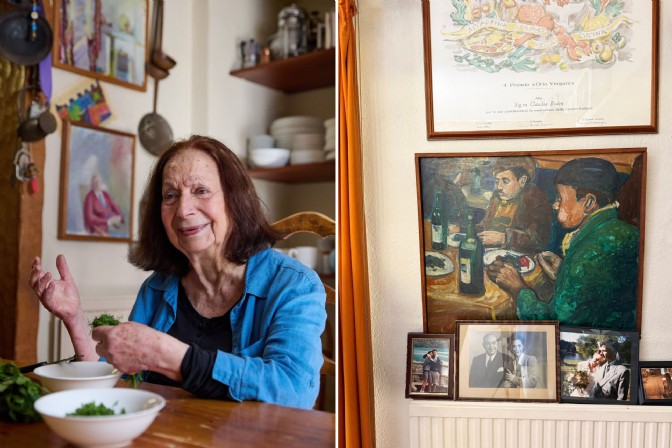
@OLA O. SMIT (pictured: Claudia Roden in her home)
Throughout your career, you’ve photographed many remarkable people in their homes, surrounded by objects that reflect their philosophy. What do you look for when you first walk into someone’s world?
I never know what I’m walking into and I go without judgement. My own home is not always tidy and life is not always tidy. The homes I most love walking into are the ones where objects have been collected over a lifetime, the homes that carry parts of who lives there.
I had the honour of photographing Claudia Roden for the Financial Times; an icon of food writing and cookbooks who has lived in her home for perhaps sixty years. As I walked from room to room I saw paintings and objects acquired throughout her life, each surfacing stories one by one. We’d be sat around the table chatting, and suddenly she'd say "oh, that piece over there- I painted that when I was twenty years old." You could feel the joy of a whole life in that space and her personality reflected in everything she'd collected. I also photographed Angela Hartnett in her home. As we were welcomed there were crates of amazing produce piled high, soon to be cooked or taken to her restaurant. I am fascinated by the fact there is always order within the chaos in the homes of creative people. Creatives are almost always collectors, too.
Le Corbusier described the home as “the treasure chest of living,” and believed that the objects we surround ourselves with reflect who we are. How does this resonate?
Home for me is very, very important. It’s a place where you recharge, where you can hide away from the world when you’re not feeling good or open your doors and invite friends in to share your joy around the table. And if you create a space that you feel good in, it functions like a charger. I love travelling, and I don’t think I’ll ever tire of it, but there was one memorable moment travelling in Thailand with my partner before our daughter was born where six weeks in we wanted to go home. Because the objects you collect and bring into an empty space, with their memories, provide comfort and a sense of familiarity, and we craved that.
An object you brought back from your travels carries the memory of where and how you got it along with the story of its maker. Suddenly the memory of the feeling of the sun comes back, and the laughter, and the surprise. The story multiplies. That's the magic of it. My home is a chest of treasures, literally, that I have collected, that carry energy, that bring me joy and peace.
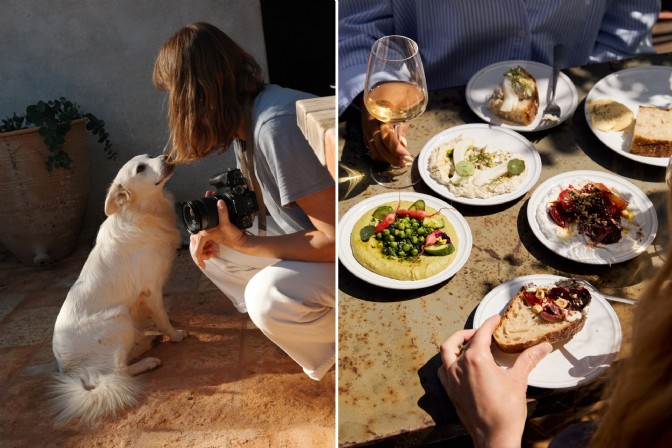
@ left image: J. Jelley (pictured: Ola in Otsuni). right image: Ola O Smit (pictured: the culpeper)
Your great-grandmother and mother appear in Zofia Rydet’s Sociological Record: a landmark photographic record of Polish domestic life recently exhibited at The Photographer’s Gallery in London. How does it feel to have a piece of your own history held within such a historic archive?
I found that photograph completely by chance, and it was an amazing discovery. In the photograph, my mother is five years old, sat with her grandmother in her home. The space is still alive because of those pictures. What Zofia Rydet did was extraordinary: she would walk into people’s homes unannounced and ask if she could take a picture. She photographed people in their domestic spaces simply for the reason of not forgetting. In a way, they will live forever.
What would you say to someone wanting to curate the objects in their own home?
I aspire to be a minimalist, but it will never happen. I love objects too much. But I do think about balance. You want to be able to pick something up and think “oh, what is happening here?” It’s nice to counter the one-offs with things that are simply beautifully designed so that when you pick up the truly special piece, you feel it. Surround yourself with things that carry energy for you – things that make you feel good, that were made by someone’s hands.
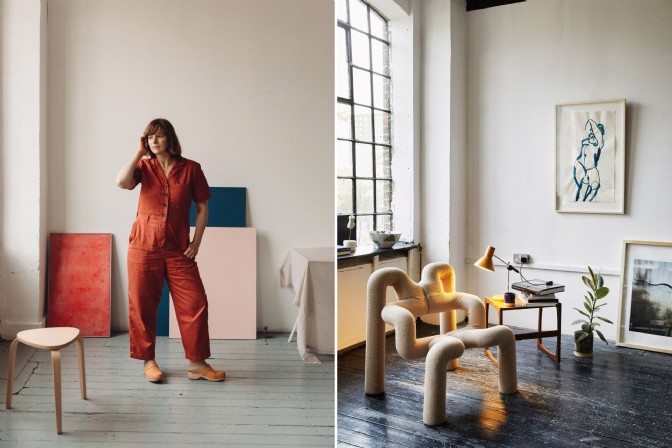
@ left image: Dunja Opalko (pictured: ola in her studio). right image: Ola O. Smit (pictured: kana art at studio feast)
Ola's Unique Homestays edit
We asked Ola to select three properties from our collection that speak to her personal sense of space and sanctuary. Here are her picks and why:
I'm drawn to its secluded position and stripped back interiors. With the busyness of work and everyday life, I feel the need to retreat into a quiet space in nature. A minimalist interior fosters a sense of tranquility and calm.
I love the rustic, organic feel, the soft, calming tones of the interiors and the way they’re surrounded by trees. It feels peaceful and secluded, yet still close enough to a small town to stay connected when needed.
The minimalist interiors with curated objects and the calming views of the sea are a perfect combination.
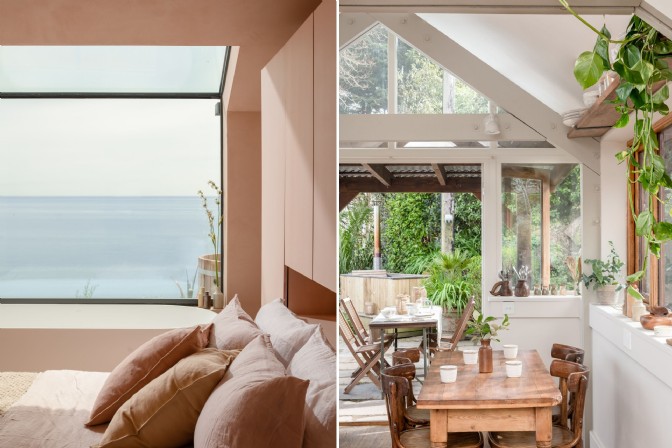
left image: Suki, whitsand bay. right image: The crafter's hut, mousehole
With thanks to Ola O. Smit for the conversation, recommendations and images.
If you're feeling inspired, read our recent piece "The home should be the treasure chest of living" to discover how our homes gather the textures of who we are as individuals, or peruse our Luxury homes with a private chef.


