

Travel, writing and reading have long been intertwined: Victorian travellers browsed railway bookstalls, and readers have followed in writers’ footsteps for centuries. Journeys furnish writers with stories, books invite readers into imaginary landscapes, and time away offers the space to lose ourselves in their pages.
Today, a cultural wellspring is forming around literary life. Reading retreats offer the luxury of uninterrupted afternoons immersed in books, whilst Austen-inspired “yearncations” indulge an appetite for bucolic country living and analogue pleasures. The enthusiasm reaches beyond travel, too: Maison Valentino’s Paris Fashion Week show staged a collective book exchange within the historic Bibliothèque Sainte-Geneviève, whilst Aesop’s global Fragrant Fables series pairs perfumes with stories, brought to life through immersive library installations.
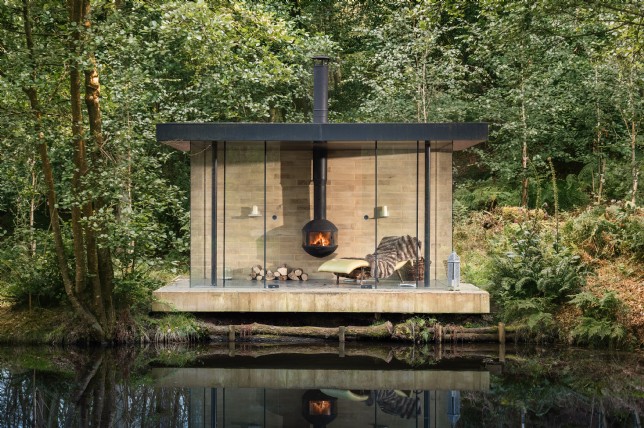
Across our collection of luxury homes, bookish spaces abound – including a dedicated over-water glass reading room at Rhapsody, and a jam-red library at Gulliver's Hall: the very home rumoured to have inspired Jilly Cooper’s salacious Rivals. Here, we share our favourite literary stays for book lovers.
William Wordsworth, The Lake District
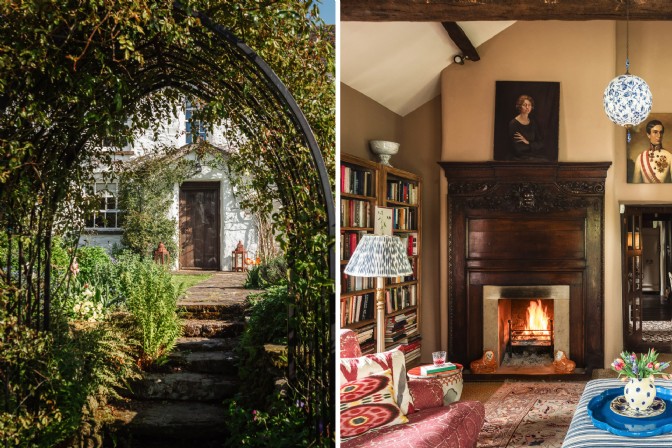
“The loveliest spot that man hath found,” said William Wordsworth of the Lake District. The great Romantic poet was drawn to its alchemy of mountains, water and open country, as was his sister Dorothy, whose now- famous journals captured the changing seasons and landscapes of the Lakes in vivid detail. Alongside fellow poets Samuel Taylor Coleridge and Robert Southey, the Wordsworths helped establish the region as a literary landscape. Here, set high above Underbarrow, lies The Tapestry, a 17th century farmhouse said to have welcomed Wordsworth as a holiday guest, with his name carved into one of the farmhouse’s original wooden panels. Inside, timber-beamed rooms are swathed in vibrant fabrics, one-off design pieces, and curios gathered from around the world. From its doorstep, hiking trails lead into the countryside, with Windermere close at hand. It was here that Wordsworth beheld the lake and wrote:
“I overlooked the bed of Windermere,
Like a vast river, stretching in the sun.
With exultation, at my feet I saw
Lake, islands, promontories, gleaming bays,
A universe of Nature’s fairest forms.”
Daphne du Maurier, Cornwall
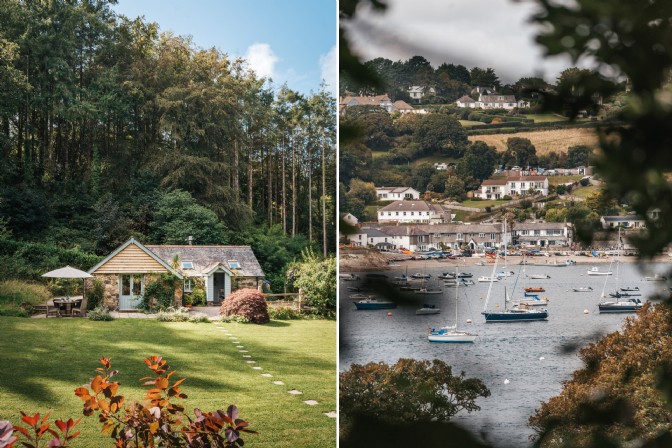
Cornwall's wooded creeks, secret coves and grand country estates held a lifelong fascination for Daphne du Maurier, whose novels are steeped in the romance and mystery of its landscapes. It was the secluded waterways of the Helford River that inspired Frenchman's Creek, a tale of forbidden love and adventure. It's here, nestled within acres of woodland near the estuary, that storybook cottage Tangle Belle resides. Stepping stones lead to the front door, unveiling a sanctuary of morning birdsong and fireside afternoons. A secluded country estate near Fowey also proved an important protagonist for du Maurier, inspiring Manderley; the haunting house at the heart of Rebecca. Echoes of Manderley's old-world grandeur can be found at Isolde on Bodmin Moor, a historic manor house nestled within acres of manicured grounds, walled gardens and ornamental ponds. Inside, centuries of history linger in high-ceilinged rooms, where antiques and walls of blood-red lend the house a character of its own. As du Maurier wrote in Vanishing Cornwall:
“Here was the freedom I desired...Freedom to write, to walk, to wander, freedom to climb hills, to pull a boat, to be alone."
Laurie Lee, Cotswolds
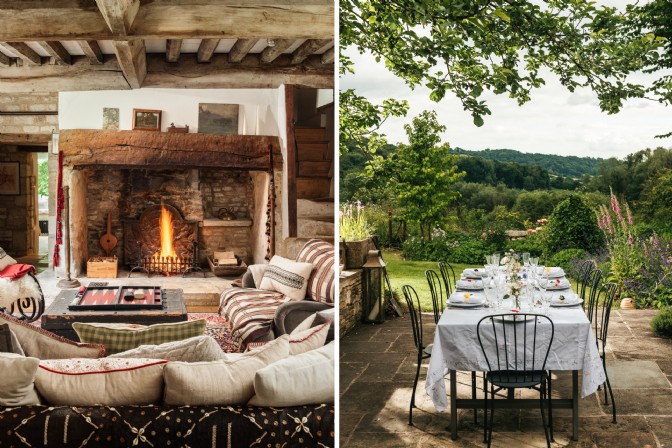
To stay at The Knapp is to step inside Laurie Lee’s Cider with Rosie. Tucked in Gloucestershire’s Slad Valley, the house sits in the very landscape Lee immortalised in his memoir of childhood in the early 20th century. “The village had its own slow time, hewn from the sun and the seasons,” he wrote, and, a century on, it's tempting to think the clock has barely moved. The setting remains much as Lee would have known it as a boy: the steep-sided valley, the fields and woodland, the stone cottages. Even The Woolpack Inn, a favourite haunt of Lee’s and a recurring presence in his writing, still stands at the heart of village life; stop here for a glass of local cider, an appropriate toast. The Knapp itself is an idyll within an idyll. Inside, the owners have worked with local conservationists to honour its past, including Lynn Chadwick prints that pay homage to the local pub’s landlord. Outside, a courtyard fringed with bluebells and sweet-pea tipis, roses and wildflowers spills towards an al fresco kitchen, where it is easy to see the landscape through Lee’s eyes:
“Bees blew like cake-crumbs through the golden air, white butterflies like sugared wafers, and when it wasn't raining a diamond dust took over which veiled and yet magnified all things.”
Jane Austen, Bath
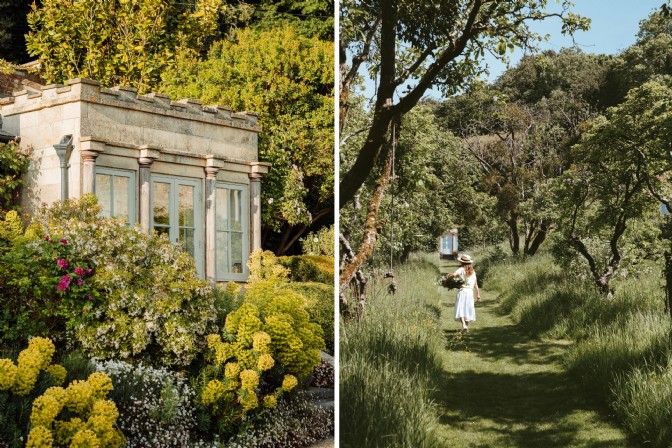
In Bath, an ordinary walk can feel like tracing the pages of a Jane Austen novel, as you amble past sweeping crescents and through rambling gardens. Austen lived here from 1901 to 1806, observing the fashionable spa society whose social manoeuvrings and entanglements animate Northanger Abbey and Persuasion. Her legacy lives on in the city’s annual September Jane Austen Festival, with its Regency promenades, talks and balls. Spend a day following her characters through honey-coloured streets, then retreat to The Walled Garden. Set within the former kitchen garden of Dyrham Park, this castellated stone folly began life as a potato house. Beyond an apple tree walkway and Gothic garden door lie a gently meandering river, waterfall and Victorian pool; made for leisurely promenades and finding escape in Austen's sharp-witted observations. Inside, a vintage writing desk overlooks the garden and fields beyond, inviting chapters to be penned before the woodburner is lit. You can imagine Fanny Price finding her own contentment here:
“To sit in the shade on a fine day, and look upon verdure, is the most perfect refreshment.”
Emily Brontë, Yorkshire
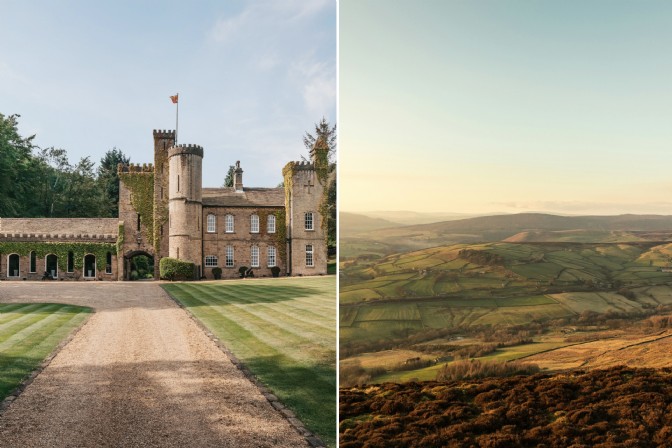
The wild, windswept moors of Yorkshire are inseparable from Emily Brontë's Wuthering Heights. Raised in the village of Haworth, the novelist grew up among the vast sweeps of heather, rugged hills and brooding skies that would shape her only novel. Here, the weather is as much a character as the people themselves, with mist rolling across the valleys, winds sweeping over the open moorland and the seasons transforming the landscape. In the green folds of West Yorkshire, near the village of Holywell Green, Castle Trinity offers a grander taste of the Gothic romance found in Brontë's pages. At the end of a private drive, its turrets rise through the trees of a wild deer park, with twelve acres of woodland, lawns and a secluded lake beyond. Inside, sweeping staircases lead to velvet-clad bedrooms, while evenings are spent around the grand piano or stately dining table. Beyond the castle grounds lies the Yorkshire countryside that Brontë so loved, a landscape whose freedom and wild beauty she captured through Catherine Earnshaw's longing:
“I wish I were out of doors! I wish I were a girl again, half savage and hardy, and free.”
Virginia Woolf, Cornwall
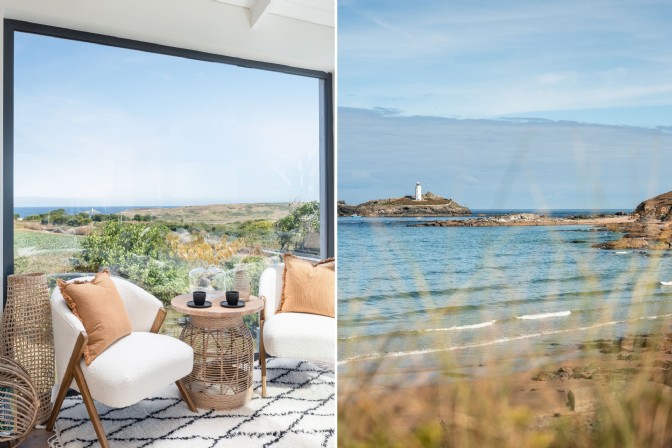
In her autobiographical essay A Sketch of the Past, Virginia Woolf fondly recalled that nothing in childhood had “made as much difference” or been “quite so important to us, as our summer in Cornwall.” Across the bay from Talland House, her family’s summer home in St Ives, stood Godrevy Lighthouse, a white tower rising from a craggy island said to be the very inspiration for To the Lighthouse. Though set in the Hebrides, the novel draws on the family’s Cornish holidays: rising “with the lark” for a promised expedition, recalling “waves mountains high," and watching a bird turn “a silver wing in the air” on a summer's evening in late September. At Senara, near Gwithian’s rolling dunes, that very lighthouse rises from the horizon. With expansive first-floor windows framing the shifting bay and the promise of poolside afternoons, warming sauna rituals and suppers prepared in the outdoor kitchen, this is an idyllic home for gathering family and friends for a seaside sojourn reminiscent of Woolf’s own. Nearby, Lightkeepers shares the lighthouse view, offering the same absorbing spectacle Woolf captured:
"up behind the great black rock, almost every evening...a fountain of white water; and then, while one waited for that, one watched, on the pale semicircular beach, wave after wave shedding again and again smoothly, a film of mother of pearl.”
Feeling inspired? Follow Emily Brontë's footsteps across windswept moorlands or read our edit of the homes woven with gothic romance.


